

Facade Repair Solutions for Cracked, Leaking, and Aging Buildings
The exterior of a building, commonly referred to as the facade, is the first thing people notice. It not only defines the aesthetic appeal but also protects the structure from harsh weather conditions, pollution, and wear over time. However, facades are constantly subjected to stress, which can lead to cracks, leaks, discoloration, and material degradation. If left untreated, these issues can compromise structural integrity, safety, and property value.
Facade repair is, therefore, essential for maintaining the longevity, safety, and beauty of any building. In this article, we explore comprehensive solutions for repairing cracked, leaking, and aging facades, along with practical tips to prevent future damage.
Understanding Facade Damage
Before diving into repair solutions, it’s crucial to understand the common types of facade damage:
1. Cracks in Facade
Cracks are one of the most visible signs of facade deterioration. They can appear due to structural movement, thermal expansion, or poor construction quality. Cracks are not just cosmetic issues—they can allow water infiltration, accelerate material decay, and compromise structural safety.
2. Water Leaks and Moisture Penetration
Water seepage can occur through faulty joints, damaged sealants, or porous materials. Over time, moisture can weaken concrete, corrode steel reinforcements, and promote mold growth. Moisture-related damage is a leading cause of expensive structural repairs.
3. Aging Materials
Aging facades may suffer from fading paint, material spalling, and surface erosion. Environmental factors such as UV radiation, pollution, and humidity accelerate this degradation. Regular inspections and maintenance are critical to preserving the integrity of the building envelope.
Common Causes of Facade Damage
Understanding the root causes helps in choosing the right facade repair solutions. The main factors include:
- Structural Settling: Buildings naturally settle over time, leading to stress cracks.
- Poor Construction or Material Quality: Substandard materials or improper installation can lead to early facade failure.
- Weather and Environmental Impact: Extreme temperatures, rain, wind, and pollution can deteriorate facade surfaces.
- Lack of Maintenance: Ignoring minor repairs often results in significant damage over time.
Facade Repair Solutions
When mentioning structural requirements or repair regulations: “Always follow local building codes and safety standards to ensure proper facade repair (UAE Building Code).”
A professional facade repair strategy involves assessing the damage, selecting appropriate materials, and implementing solutions tailored to the building type and extent of deterioration.
1. Crack Repair Solutions
Epoxy Injection: Ideal for structural cracks, epoxy strengthens the concrete and restores load-bearing capacity.
Surface Sealants: For minor, non-structural cracks, applying flexible sealants prevents water ingress.
Repointing Joints: In masonry facades, damaged mortar joints can be replaced to restore stability.
2. Water Leakage Repairs
- Waterproof Coatings: High-quality waterproof paints or membranes prevent moisture penetration.
- Sealant Replacement: Aging or damaged sealants around windows, doors, and joints should be replaced regularly.
- Drainage Solutions: Installing proper gutters, downspouts, and flashings ensures water is directed away from the facade.
3. Aging Facade Renovation
- Surface Cleaning: Techniques like pressure washing, sandblasting, or chemical cleaning restore the original appearance.
- Repainting and Cladding: Fresh paint or new cladding not only improves aesthetics but also protects against environmental damage.
- Material Replacement: Severely deteriorated panels, tiles, or stones may require complete replacement to maintain structural integrity.
4. Advanced Technologies in Facade Repair
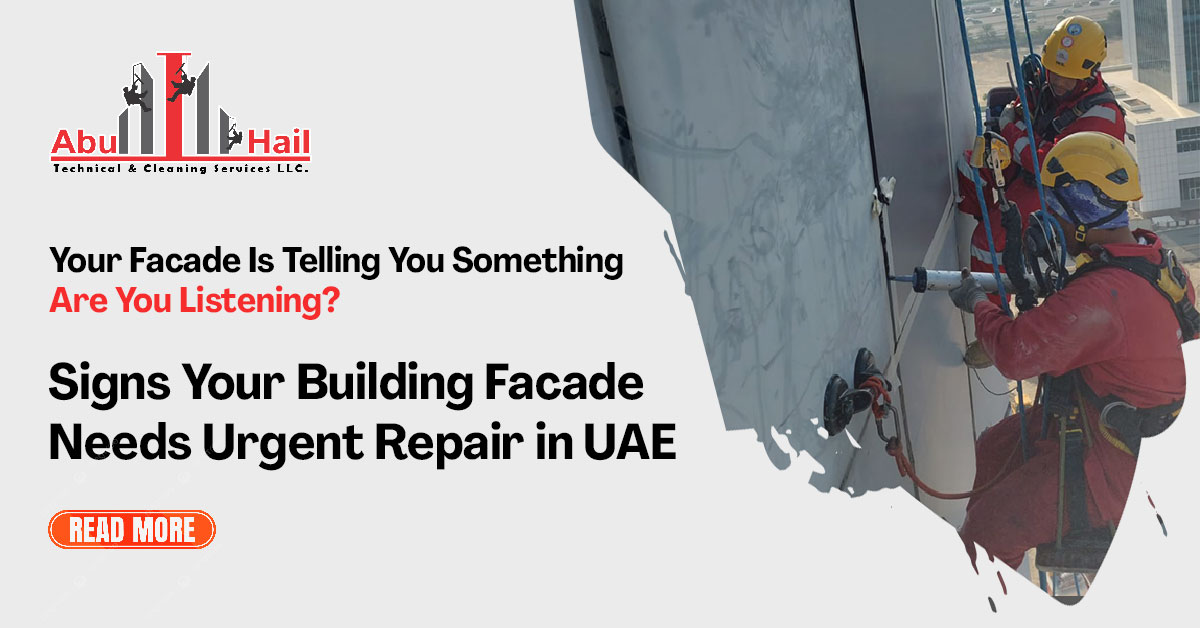
Rope Access Maintenance: Provides safe, cost-effective access to high-rise facades without scaffolding.
3D Scanning and Thermal Imaging: Helps identify hidden cracks, moisture accumulation, and insulation gaps.
Smart Coatings: Self-cleaning or hydrophobic coatings extend the life of the facade and reduce maintenance costs.
Steps to Ensure Successful Facade Repair
Inspection and Assessment: Professional facade inspection identifies visible and hidden defects.
Damage Analysis: Determining the cause and severity of cracks, leaks, or aging materials.
Customized Repair Plan: Select materials and methods suitable for the type of damage.
Quality Execution: Certified technicians carry out repairs following industry standards.
Maintenance Plan: Regular inspections and preventive maintenance prevent future issues.
Benefits of Professional Facade Repair
- Enhanced Safety: Prevents structural failures and reduces risk to occupants.
- Aesthetic Appeal: Restores the building’s visual appeal, enhancing property value.
- Energy Efficiency: Proper repair and sealing reduce heat loss and improve insulation.
- Longevity: Extends the lifespan of the facade and minimizes long-term costs.
- Compliance: Meets building codes and safety regulations.
Choosing the Right Facade Repair Company
Selecting a professional service provider is crucial for high-quality results. Look for companies that:
- Have extensive experience in facade repair.
- Use modern equipment and certified materials.
- Offer a comprehensive inspection and maintenance plan.
- Provide guarantees and warranties on repairs.
- Prioritize safety and environmental standards.
Preventive Measures to Minimize Facade Damage
Conduct annual inspections to detect early signs of damage.
Maintain sealants, gutters, and drainage systems.
Apply protective coatings to prevent weathering.
Clean the facade regularly to remove dirt, pollutants, and mold.
Address minor cracks immediately to avoid major repairs.
Frequently Asked Questions (FAQs)
Q1: How often should a facade be inspected?
A: Professional inspections are recommended every 1-2 years, depending on building age, materials, and environmental conditions.
Q2: Can minor cracks be ignored?
A: No. Even minor cracks can lead to water infiltration and structural deterioration if not addressed promptly.
Q3: How long does a typical facade repair take?
A: Repair duration depends on the damage type and building size. Minor repairs may take a few days, while extensive projects can last several weeks.
Q4: Are there eco-friendly facade repair options?
A: Yes. Modern repairs use low-VOC paints, recyclable materials, and energy-efficient coatings to reduce environmental impact.
Q5: How can I prevent facade damage in high-rise buildings?
A: Implement routine maintenance, waterproofing, and rope access inspections to address issues early and prevent major repairs.
Facade repair is not just a cosmetic upgrade—it’s an essential investment in building safety, aesthetics, and longevity. From crack repairs and water leakage solutions to aging facade renovation, a well-planned and professionally executed repair strategy ensures that your building remains structurally sound and visually appealing.
Partnering with experienced facade repair specialists can save time, reduce costs, and increase property value. Proactive maintenance combined with modern repair technologies guarantees that your building’s facade stands the test of time, weather, and environmental challenges.
Invest in your building today for a strong, safe, and stunning facade tomorrow.