

How Facade Sealant Application Protects Your Building from Water Leakage and Structural Damage
Why Facade Water Leakage Is a Serious Concern for Building Owners
If you own, manage, or are responsible for maintaining a building, one issue you never want to ignore is water leakage from the façade. What may start as a small crack or damp patch can quickly turn into serious structural damage, safety risks, and expensive repairs.
In climates like the UAE—where buildings face extreme heat, humidity, occasional heavy rainfall, and constant thermal movement—the exterior façade is under continuous stress. Over time, joints open, sealants fail, and water finds its way inside.
This is where Facade Sealant Application becomes essential—not just as a repair solution, but as a preventive protection system for your building.
In this detailed guide, we will explain:
- What facade sealant application really is
- How it prevents water leakage
- How it protects your building’s structure
- Why professional rope access application matters
- What building owners should look out for
- How this service saves you money long-term
Understanding Facade Sealant Application from a Building Owner’s Perspective
As a building owner, your façade is more than just an exterior surface—it is a protective envelope that shields everything inside. Facade sealant application involves applying high-performance sealing materials to all vulnerable points of the building exterior, including:
- Expansion joints
- Window and door perimeters
- Curtain wall joints
- Concrete cracks
- Cladding connections
These sealants are specifically designed to block water, resist UV rays, absorb building movement, and withstand harsh weather conditions.
Think of facade sealants as a flexible armor that keeps water out while allowing your building to naturally expand and contract.
Why Water Leakage Through the Facade Should Never Be Ignored
Many property owners underestimate the damage water leakage can cause—especially when it’s not immediately visible.
1. Water Damage Is Often Hidden
Water doesn’t stop at the surface. Once it enters through façade cracks or failed joints, it can:
- Penetrate concrete
- Reach steel reinforcement
- Weaken structural elements from the inside
By the time damage becomes visible, repairs are often extensive and costly.
2. Structural Integrity Is Gradually Compromised
When water reaches steel reinforcement:
- Steel begins to corrode
- Rust expands and cracks concrete
- Load-bearing capacity reduces over time
This slow damage can threaten the long-term safety of the building.
3. Mold, Dampness & Health Risks
Persistent moisture inside walls creates ideal conditions for mold growth, which can:
- Affect indoor air quality
- Trigger allergies and respiratory issues
- Create unhealthy living or working environments
4. Aesthetic & Property Value Loss
Water stains, peeling paint, cracked plaster, and façade discoloration significantly reduce:
- Building appearance
- Tenant satisfaction
- Market and rental value
How Facade Sealant Application Stops Water Leakage Effectively
1. Sealing All Water Entry Points
Water enters buildings mainly through:
- Open joints
- Hairline cracks
- Poorly sealed windows
- Aging façade materials
Professional facade sealant application fills and seals these weak points, creating a watertight barrier.
2. Flexibility That Adapts to Building Movement
Buildings constantly move due to:
- Heat expansion during the day
- Cooling contraction at night
- Wind pressure on high-rise structures
High-quality sealants remain flexible, ensuring joints stay sealed even when the structure moves.
3. Protection Against Wind-Driven Rain
In tall buildings, rain doesn’t fall straight down—it is forced sideways by strong winds. Properly applied sealants prevent water from being pushed deep into façade joints.
4. Reinforcing Existing Waterproofing Systems
Facade sealants work together with:
- Waterproof membranes
- Exterior coatings
- Drainage systems
This layered defense approach significantly improves water resistance.
How Facade Sealant Application Prevents Structural Damage
Protecting Concrete from Deterioration
When water penetrates concrete:
- It weakens the material
- Causes internal cracking
- Leads to surface spalling
Sealants block water before it can cause internal damage.
Preventing Steel Corrosion
Steel corrosion is one of the most dangerous long-term issues for buildings. Facade sealant application keeps moisture away from reinforcement steel, preserving structural strength.
Reducing Repair and Rehabilitation Costs
Preventive sealing costs far less than:
- Structural strengthening
- Concrete repair
- Façade replacement
- Emergency leak repairs
Types of Sealants Used in Facade Sealant Application
Choosing the right sealant is critical. Professionals select sealants based on building material, movement level, and environmental exposure.
Silicone Sealants
- Excellent UV resistance
- High flexibility
- Ideal for glass façades and curtain walls
Polyurethane Sealants
- Strong adhesion
- Suitable for concrete and masonry
- High mechanical strength
Hybrid Sealants
- Combine flexibility and durability
- Suitable for demanding environments like the UAE
Acrylic Sealants
- Cost-effective
- Best for low-movement areas
Why Professional Application Matters More Than the Sealant Itself
Even the best sealant will fail if applied incorrectly.
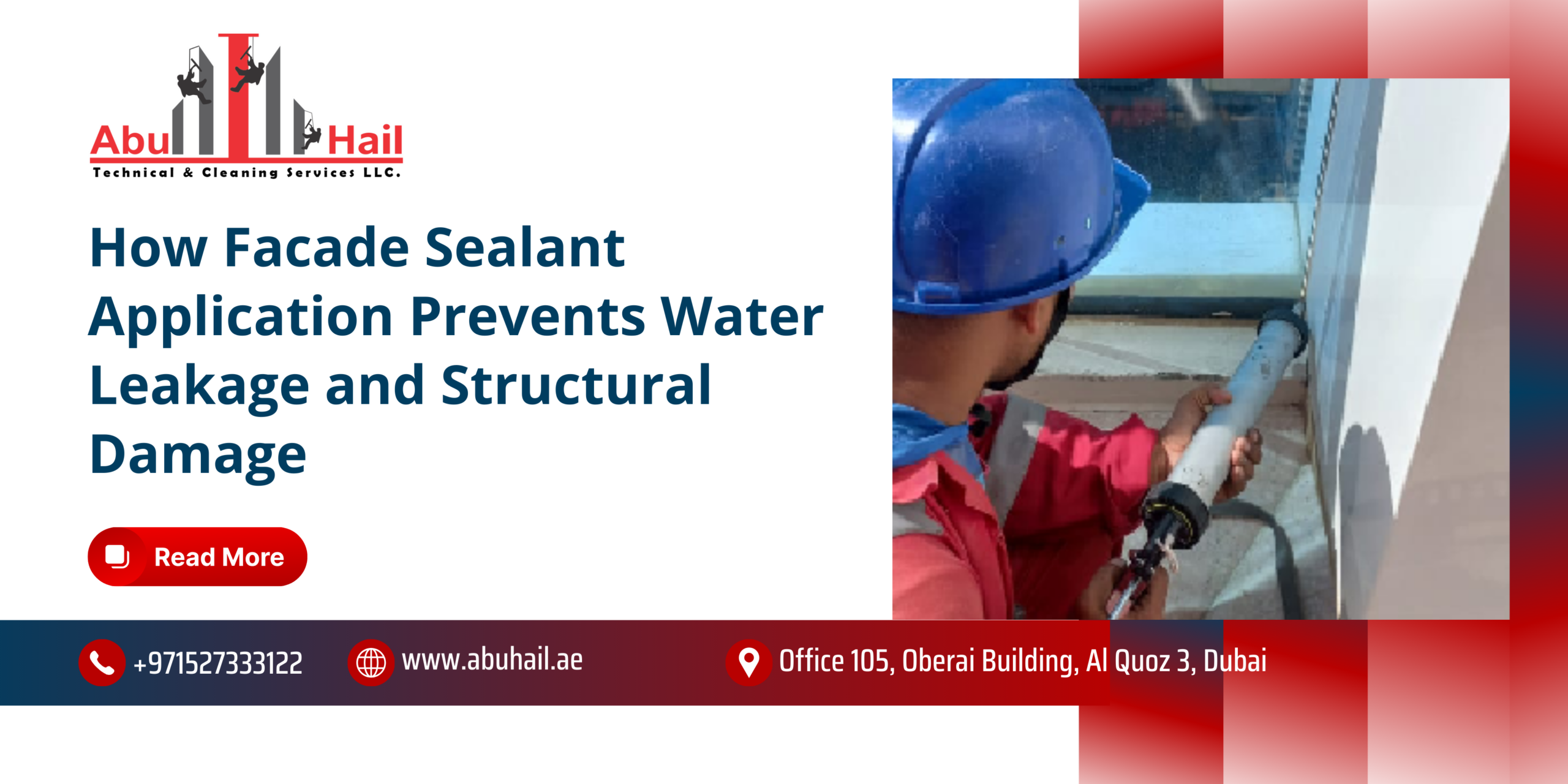
Professional facade sealant application ensures:
- Proper surface preparation
- Correct joint depth and width
- Proper tooling and finishing
- Long-term adhesion and durability
Improper application often leads to:
- Early failure
- Recurring leakage
- Increased maintenance costs
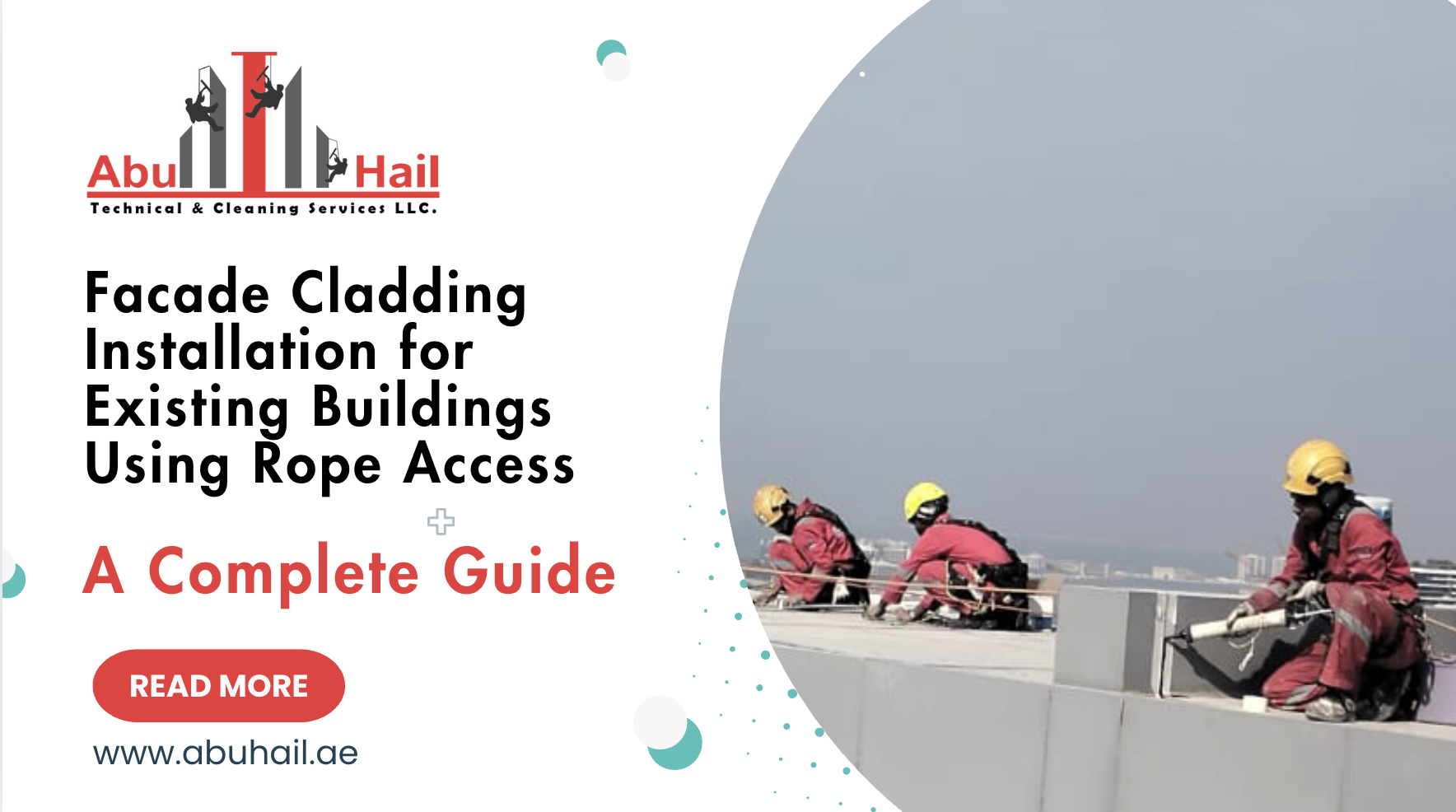
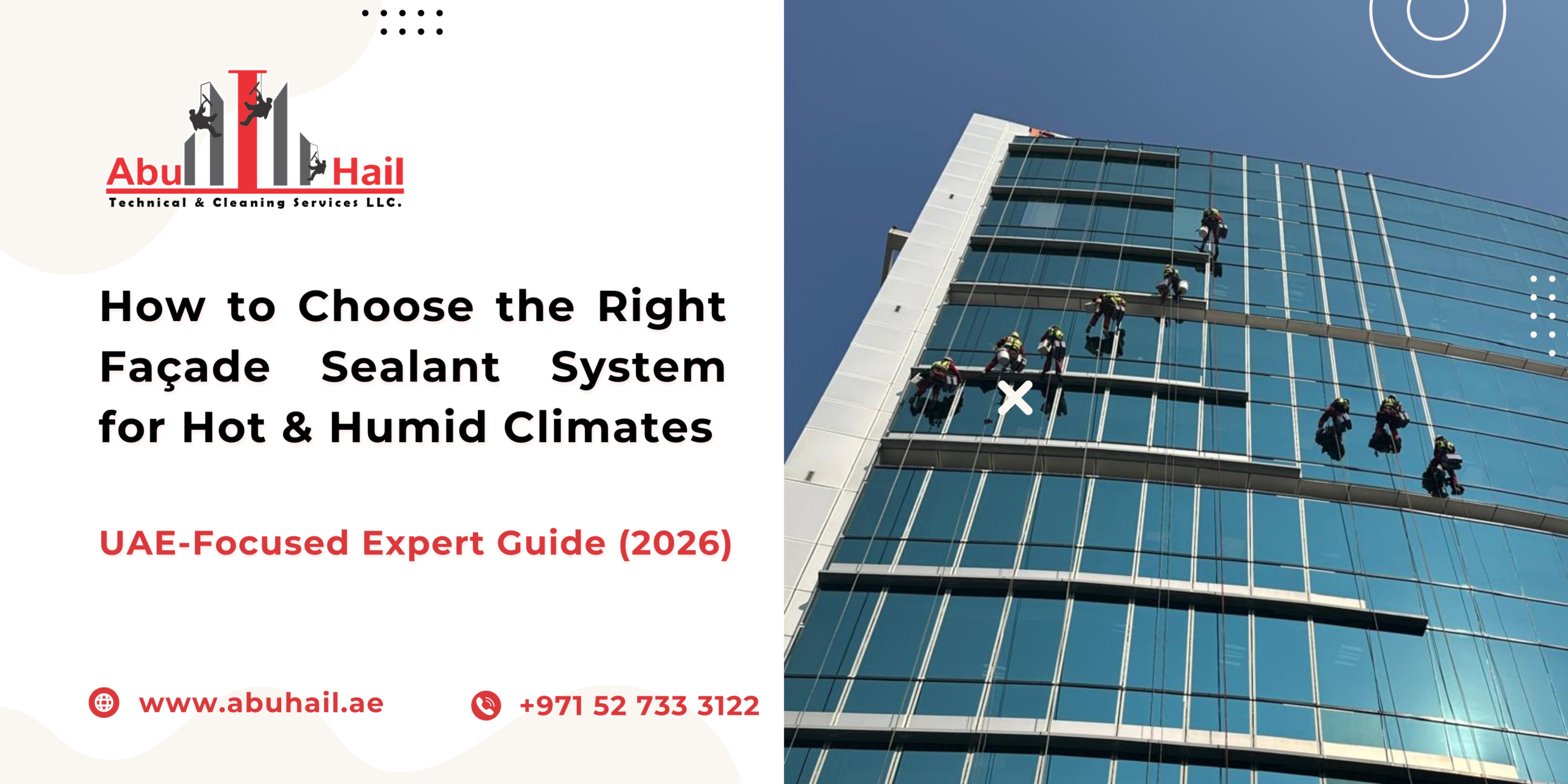
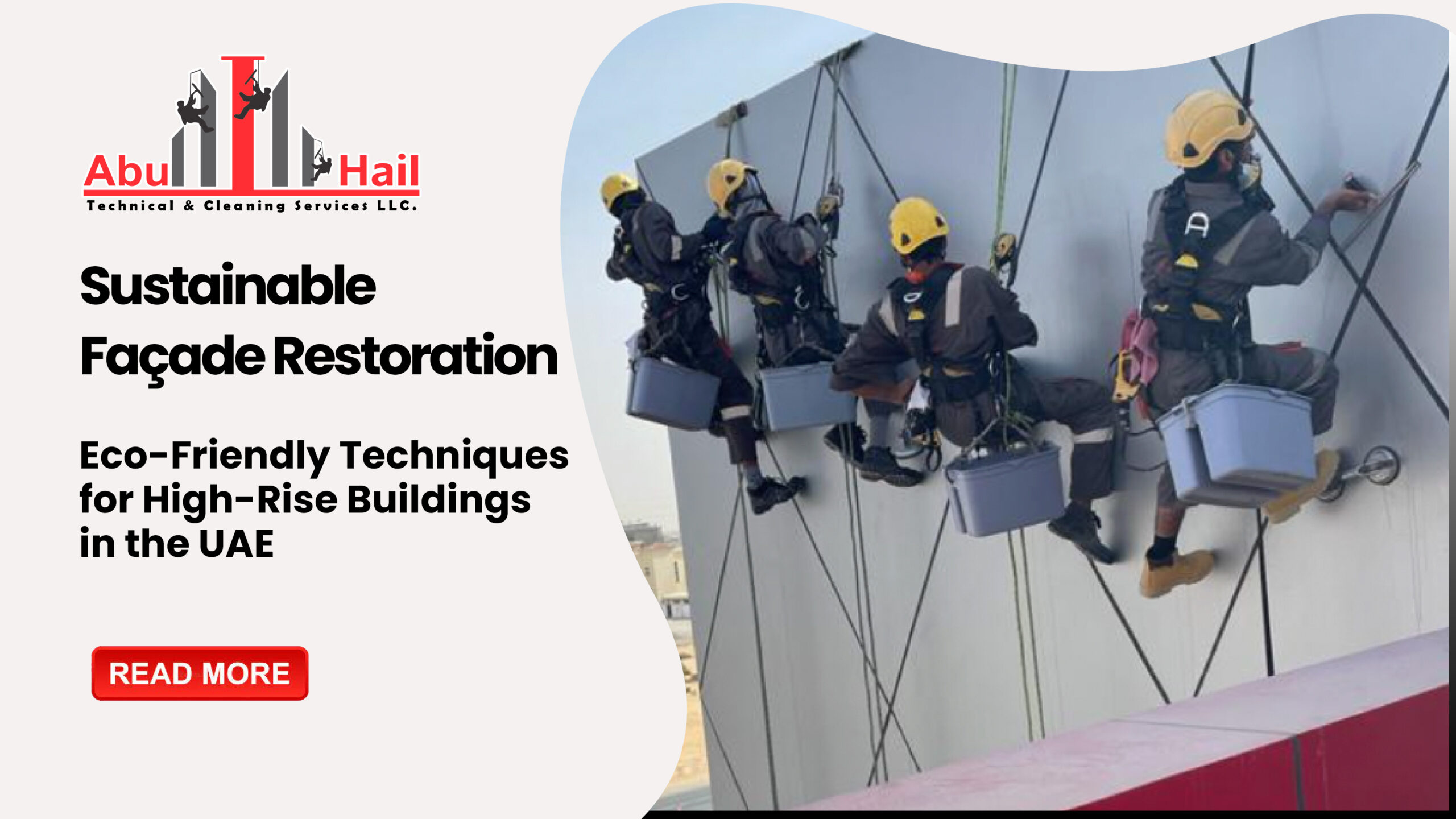
Why Rope Access Is the Best Solution for Facade Sealant Application
For high-rise and complex structures, rope access is the most efficient and practical solution.
Benefits for Building Owners:
- No scaffolding or heavy equipment
- Faster project completion
- Minimal disruption to occupants
- Lower overall project cost
- Access to difficult façade areas
Rope access allows technicians to reach every joint and crack, ensuring complete coverage.
Common Facade Areas That Require Sealant Application
- Expansion and control joints
- Window and door frames
- Curtain wall interfaces
- Concrete panel joints
- Cladding seams
- Balcony edges
Neglecting even one of these areas can lead to leakage.
Warning Signs Your Building Needs Facade Sealant Application
If you notice any of the following, your building likely needs immediate attention:
- Interior water stains
- Damp patches near windows
- Cracks on exterior walls
- Peeling paint or plaster
- Mold smell indoors
- Water dripping during rain
Early intervention prevents major damage.
Facade Sealant Application in UAE Climate Conditions
The UAE environment places extreme demands on building façades due to:
- Intense UV exposure
- High humidity
- Temperature fluctuations
- Sand and dust
Using UAE-grade sealants and professional application techniques is essential for long-term performance.
Long-Term Maintenance & Inspection
Facade sealants are durable but not permanent. Regular inspections help:
- Identify early sealant wear
- Prevent sudden leakage
- Extend service life
Professional inspections every 2–3 years are recommended.
Why Choose Abu Hail for Facade Sealant Application?
From a building owner’s point of view, choosing the right service provider is crucial.
Abu Hail offers:
- Specialized rope access façade services
- Experienced and trained technicians
- High-quality sealant materials
- Strict safety compliance
- Proven expertise in UAE high-rise buildings
Their approach focuses on long-term protection, not temporary fixes.
Frequently Asked Questions (FAQ)
What is facade sealant application?
Facade sealant application is the professional sealing of joints, cracks, and gaps on a building’s exterior to prevent water leakage and structural damage.
Can facade sealant application stop existing leaks?
Yes. When applied correctly, sealants effectively stop active leaks and prevent future water intrusion.
How long does facade sealant last?
Depending on the sealant type and exposure, it can last between 10 to 20 years.
Is rope access safe for facade sealant work?
Yes. Rope access is internationally approved and safer than traditional scaffolding when performed by certified technicians.
How often should sealants be inspected?
Every 2–3 years, or sooner if leakage signs appear.
Protecting Your Building Starts with the Facade
As a building owner or manager, preventive maintenance is always cheaper than repair. Facade sealant application is not just about stopping leaks—it is about protecting your investment, ensuring occupant safety, and extending the life of your building.
By addressing façade vulnerabilities early and using professional rope access services, you safeguard your property against water damage and structural deterioration for years to come.