

How Facade Silicone Filling Prevents Water Leakage and Structural Damage in Towers
High-rise buildings are a symbol of modern urban architecture, particularly in Dubai, where towers define the city skyline. While these structures are visually impressive, they are constantly exposed to environmental challenges, including harsh sunlight, high humidity, heavy rainfall, and coastal salt-laden air.
One of the most common yet overlooked issues in high-rise construction is water leakage through facades, which can lead to structural damage, mold growth, and expensive repairs.
Professional facade silicone filling by rope access experts provides a reliable solution, ensuring buildings remain waterproof, safe, and structurally sound.
What Is Facade Silicone Filling?
Facade silicone filling is the process of applying high-quality silicone sealant to the exterior joints and gaps of a building’s facade. These joints exist between glass panels, aluminum composite panels (ACP), concrete sections, and other exterior materials.
Unlike regular sealants, silicone sealants are:
Highly elastic, accommodating building expansion and contraction.
UV resistant, ensuring long-term durability in harsh sunlight.
Waterproof, preventing water penetration even under heavy rain.
This technique is particularly essential for modern glass facades and high-rise towers, where every joint is a potential entry point for water.
Why High-Rise Towers Are Susceptible to Water Leakage
Several factors make tall buildings prone to water leakage:
Weather Conditions – Heavy rains, high humidity, and coastal winds can push water into facade joints.
Temperature Fluctuations – Expansion and contraction of materials create gaps over time.
Aging Sealants – Over years, standard sealants lose adhesion and crack.
Construction Flaws – Poor installation of panels or sealant can leave vulnerabilities.
If water seeps into the structure, it can damage concrete, steel reinforcements, and internal walls, resulting in costly repairs and safety risks.
How Silicone Filling Prevents Water Leakage
Silicone filling works by creating a continuous waterproof barrier along facade joints. Here’s how it protects your building:
Seals Joints Effectively: Silicone fills gaps between glass, ACP, and concrete panels, leaving no room for water infiltration.
Handles Movement: High-rise buildings expand and contract due to wind and temperature changes; silicone’s elasticity accommodates this movement without cracking.
Resists Environmental Stress: UV rays, dust, and extreme temperatures do not degrade silicone quickly, ensuring long-lasting protection.
Prevents Mold & Corrosion: By keeping water out, it prevents mold growth and corrosion of metal reinforcements.
A properly applied silicone barrier ensures that even heavy rain or storm conditions won’t compromise the building’s integrity.
Preventing Structural Damage Through Proper Facade Maintenance
Water leakage is more than a cosmetic problem. Over time, it can lead to:
Concrete spalling: Water penetrates concrete, causing the surface to peel and weaken.
Corrosion of steel reinforcements: Water and moisture accelerate rusting in structural steel, compromising stability.
Interior damage: Ceilings, walls, and insulation inside the building can deteriorate, leading to mold and high repair costs.
By regularly inspecting and applying facade silicone filling, building owners can:
- Extend the lifespan of the building facade.
- Reduce maintenance and repair costs.
- Protect the safety of occupants and structural integrity.
Advantages of Using Rope Access for Facade Silicone Filling
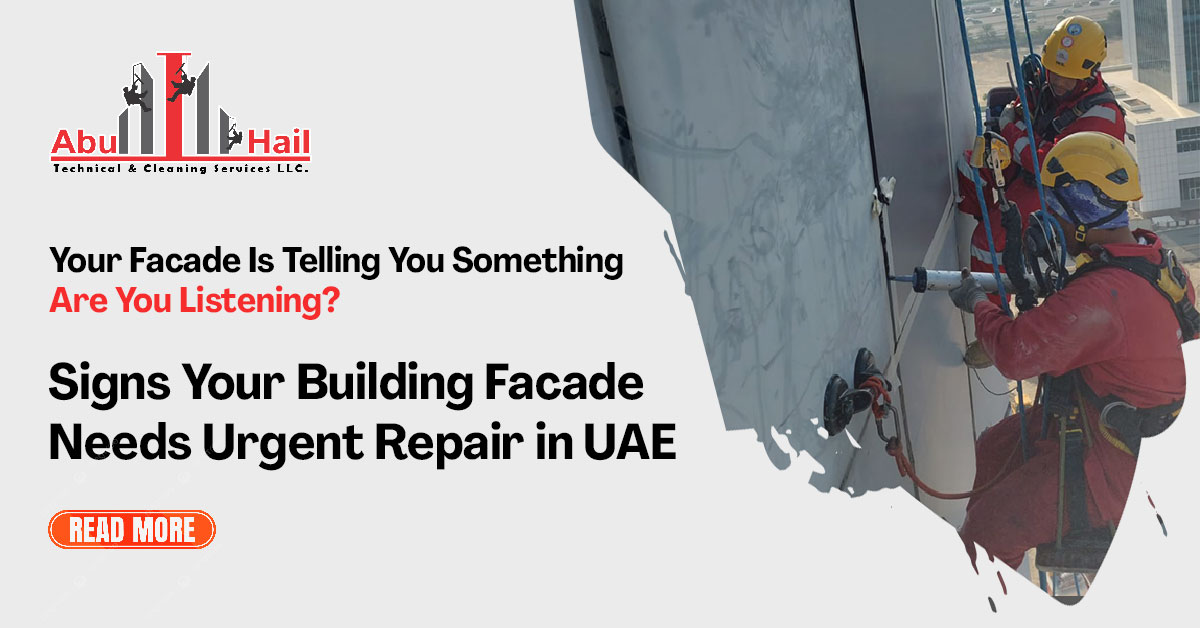
Traditional methods like scaffolding are expensive, time-consuming, and disruptive. Rope access offers a modern, efficient, and safe alternative.
Benefits include:
Speed: Technicians can reach any area quickly without erecting heavy scaffolding.
Safety: Rope access uses certified climbers trained in high-rise work, minimizing accidents.
Minimal Disruption: Work can be done without disturbing building occupants or traffic around the site.
Cost-Effectiveness: Reduces labor, equipment, and setup costs.
Rope access has become the preferred method for high-rise facade maintenance in Dubai, especially for silicone filling and sealing jobs.
Signs Your Building Needs Facade Silicone Filling
Property owners should watch for the following warning signs:
Water Stains on Interior Walls and Ceilings – A clear indicator of leaks from exterior joints.
Cracks or Gaps in Facade Joints – Directly exposes the building interior to water.
Peeling or Damaged Exterior Panels – Often caused by prolonged water exposure.
Drafts or Air Leakage – Indicates failed sealants.
Visible Mold or Mildew – Common in areas where water has penetrated the facade.
Addressing these signs early with professional silicone filling can prevent expensive structural repairs in the future.
High-rise towers in Dubai face unique environmental challenges that put facades at risk of water leakage and structural damage. Facade silicone filling is a highly effective solution, providing:
- Waterproofing and protection against harsh weather.
- Long-term durability and elasticity.
- Prevention of structural weakening, mold growth, and interior damage.
When combined with rope access techniques, silicone filling becomes faster, safer, and more cost-effective than traditional methods.
Regular maintenance and timely application of silicone sealant can save property owners thousands of dirhams in repairs while ensuring building safety and aesthetic appeal.
Protect your high-rise tower today!
Contact Abu Hail Technical & Cleaning Services LLC for professional facade silicone filling by rope access. Ensure your building stays waterproof, safe, and structurally sound.
📞 Call now or request a free inspection!
Frequently Asked Questions (FAQs)
1. What is facade silicone filling?
Facade silicone filling is the process of applying high-quality silicone sealant to the joints and gaps of a building’s exterior, including glass panels, ACP, and concrete, to prevent water leakage and structural damage.
2. Why is silicone filling important for high-rise buildings?
High-rise buildings are exposed to heavy rain, wind, humidity, and UV rays. Silicone filling creates a waterproof barrier, prevents leaks, and protects the structure from long-term damage.
3. How often should silicone filling be reapplied?
Silicone filling typically lasts 5–10 years, depending on weather exposure and quality. Regular inspections can help determine when reapplication is needed.
4. Can rope access be used for all high-rise buildings?
Yes. Rope access is highly flexible and can reach difficult-to-access areas of high-rise towers safely and efficiently, without the need for scaffolding.
5. How does silicone filling prevent structural damage?
By sealing facade joints, silicone filling stops water from entering the building, preventing corrosion of steel reinforcements, concrete spalling, and interior wall damage.
6. Is silicone filling effective in extreme weather conditions?
Absolutely. High-quality silicone sealants are UV resistant, flexible, and waterproof, making them ideal for Dubai’s harsh sun, humidity, and occasional heavy rains.
7. What are the signs that my building needs facade silicone filling?
Look for water stains on ceilings or walls, cracks or gaps in facade joints, peeling exterior panels, drafts, or visible mold and mildew.
8. How long does a typical facade silicone filling project take?
The duration depends on building size and complexity. Rope access allows technicians to complete work faster than traditional scaffolding methods, often reducing project time by 30–50%.
9. Is silicone filling a cost-effective solution?
Yes. While the upfront cost may be higher than temporary fixes, it reduces long-term maintenance and prevents costly structural repairs, making it a smart investment.
10. Can silicone filling improve energy efficiency?
Yes. By sealing gaps and preventing air leakage, silicone filling helps maintain indoor temperatures, reducing HVAC energy consumption.
11. Are professional technicians necessary for silicone filling?
Yes. Proper application requires expertise, especially for high-rise buildings. Certified rope access professionals ensure safety, precision, and long-lasting results.
12. Can silicone filling be applied to all types of facades?
Silicone filling works on glass, aluminum composite panels (ACP), concrete, and most other exterior materials commonly used in modern towers.
13. How do I maintain my building after silicone filling?
Regular inspections (every 1–2 years) and cleaning of facade joints help identify early signs of wear or damage, ensuring longevity of the silicone sealant.
14. Does silicone filling affect the appearance of my building?
No. High-quality silicone sealants are available in clear or color-matched options, preserving the aesthetic appeal of your facade.
15. How can I hire a professional rope access team for silicone filling in Dubai?
Contact Abu Hail Technical & Cleaning Services LLC, which specializes in rope access facade maintenance, providing expert silicone filling services with safety and efficiency.