

How UAE Weather Affects Buildings & Why Maintenance is Essential
In rapidly growing urban hubs like Dubai and across the United Arab Emirates, modern architecture continues to push boundaries with high-rise towers, glass facades, and complex structural designs. While these buildings represent innovation and luxury, they also face one critical challenge—extreme weather conditions.
From scorching temperatures and intense UV radiation to sandstorms and high humidity, UAE weather is among the harshest globally. Over time, these environmental factors silently degrade buildings, leading to structural damage, safety risks, and expensive repairs.
This is where rope access Dubai services play a crucial role. Offering a safe, efficient, and cost-effective solution, rope access has become the preferred method for maintaining high-rise structures in the region.
In this comprehensive guide, we will explore how UAE weather impacts buildings and why rope access maintenance is not just beneficial—but essential.
Understanding the Harsh UAE Climate
Extreme Heat and Thermal Stress
Summers in Dubai often see temperatures exceeding 45°C. This extreme heat creates thermal stress in building materials.
Impact on buildings:
- Expansion and contraction of concrete and steel
- Cracking in walls and structural components
- Degradation of sealants and adhesives
Repeated thermal cycles weaken the building envelope, making it more vulnerable to long-term damage.
Intense UV Radiation
The UAE experiences high levels of ultraviolet (UV) radiation throughout the year.
Effects include:
- Fading of paint and coatings
- Breakdown of waterproofing layers
- Reduced lifespan of exterior materials
Without proper maintenance, UV damage can significantly reduce a building’s durability.
High Humidity and Moisture Intrusion
Being a coastal city, Dubai experiences high humidity, especially during summer months.
Consequences:
- Mold and mildew growth
- Corrosion of metal structures
- Water seepage into walls
Humidity accelerates the aging process of buildings, particularly in poorly maintained structures.
Sandstorms and Dust Accumulation
Dust storms are a frequent occurrence in the UAE.
Impact on building exteriors:
- Scratches on glass facades
- Clogging of drainage systems
- Accumulation of dirt on surfaces
Over time, this leads to both aesthetic and functional deterioration.
Salt-Laden Coastal Air
Buildings near the coastline are constantly exposed to saline air.
This results in:
- Rusting of steel reinforcements
- Weakening of structural components
- Surface corrosion
Salt corrosion is one of the leading causes of structural damage in coastal regions of the UAE.
How Weather Affects Different Building Components
1. Glass Facades
Modern buildings in Dubai heavily rely on glass facades.
Common issues:
- Water stains and discoloration
- Sealant failure
- Reduced insulation efficiency
Without regular cleaning and inspection, glass facades lose both functionality and visual appeal.
2. Concrete Structures
Concrete is widely used in UAE construction but is highly sensitive to environmental stress.
Problems include:
- Cracking and spalling
- Exposure of reinforcement bars
- Water infiltration
If ignored, these issues can compromise structural safety.
3. Sealants and Joints
Sealants protect buildings from water and air leakage.
Due to weather:
- They dry out and crack
- Lose flexibility
- Fail to provide insulation
4. Roofing Systems
Roofs bear the brunt of direct sunlight and heat.
Damage includes:
- Membrane degradation
- Leakage issues
- Increased energy costs due to insulation failure
What is Rope Access?
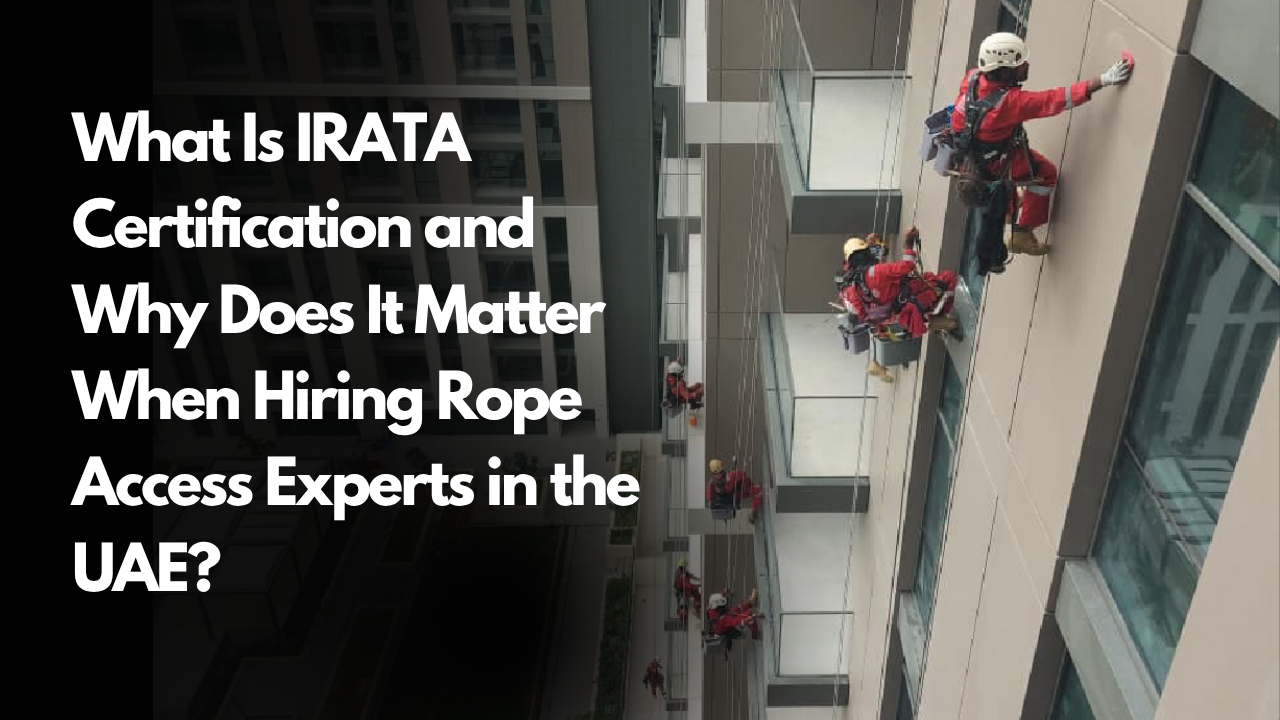
Rope access is a specialized technique that allows technicians to access high-rise or hard-to-reach areas using ropes, harnesses, and advanced safety systems.
Originally developed for industrial climbing and offshore operations, rope access has become a standard in building maintenance—especially in cities like Dubai with vertical infrastructure.
Why Rope Access is Essential in Dubai
1. Designed for High-Rise Buildings
Dubai’s skyline is filled with skyscrapers and complex architectural designs. Traditional methods like scaffolding are often impractical.
Rope access allows:
- Easy navigation of tall structures
- Access to tight or curved spaces
- Efficient maintenance at any height
2. Cost-Effective Maintenance Solution
Compared to cranes and scaffolding:
- Lower setup costs
- Reduced labor requirements
- No need for heavy machinery
This makes rope access a budget-friendly option for building owners.
3. Faster Project Execution
Time is critical in building maintenance.
Rope access enables:
- Quick mobilization
- Immediate start of work
- Faster completion times
4. Minimal Disruption
Unlike scaffolding, rope access:
- Does not block entrances or walkways
- Allows normal building operations
- Reduces inconvenience for occupants
5. High Safety Standards
Certified rope access technicians follow strict international safety protocols, ensuring secure and reliable operations.
Key Rope Access Services in Dubai
Facade Cleaning
Dust and sand accumulation is unavoidable in Dubai.
Benefits of regular cleaning:
- Maintains building aesthetics
- Prevents permanent staining
- Enhances property value
Facade Inspection
Routine inspections help detect problems early.
Technicians can identify:
- Cracks
- Loose panels
- Water leakage points
Sealant Replacement
Sealants deteriorate quickly under UAE weather conditions.
Rope access allows:
- Efficient removal of old sealant
- Application of new, durable materials
- Prevention of water damage
Painting and Protective Coating
Protective coatings shield buildings from UV rays and moisture.
Structural Repairs
Rope access enables immediate repair of:
- Concrete damage
- Loose fixtures
- Corroded elements
Long-Term Benefits of Rope Access Maintenance
Extends Building Lifespan
Regular maintenance prevents major structural issues, ensuring buildings last longer.
Reduces Repair Costs
Early detection and repair save significant costs compared to large-scale renovations.
Improves Safety
Maintained buildings reduce risks for occupants and pedestrians.
Enhances Property Value
Clean and well-maintained buildings attract tenants and investors.
Why Businesses in Dubai Prefer Rope Access
In a competitive real estate market like Dubai, maintaining a building’s appearance and safety is crucial.
Rope access provides:
- Efficient maintenance solutions
- Professional results
- Long-term cost savings
This makes it the preferred choice for property managers and developers.
Don’t let harsh UAE weather damage your building.
👉 Protect your investment today with expert rope access Dubai services.
At Abu Hail Technical Services, we provide professional inspection, cleaning, and repair solutions tailored to Dubai’s unique environment.
🌐 Visit: https://abuhail.ae/
📞 Contact us now to schedule your inspection!
FAQs
1. What is rope access used for in Dubai?
Rope access is used for building maintenance, cleaning, inspection, and repairs on high-rise structures.
2. How often should facade maintenance be done?
At least once or twice a year, depending on exposure to dust, humidity, and coastal conditions.
3. Is rope access better than scaffolding?
Yes, it is faster, more cost-effective, and less disruptive.
4. Is rope access safe?
Yes, when performed by trained and certified professionals following strict safety standards.
5. Why is building maintenance important in UAE?
Due to extreme weather, regular maintenance prevents structural damage and extends building lifespan.
The climate in Dubai and across the UAE poses serious challenges to building durability. From heat and humidity to sandstorms and salt corrosion, these factors can quickly degrade even the most modern structures.
Rope access Dubai services provide a smart, efficient, and cost-effective solution to tackle these challenges. By enabling safe and quick maintenance of high-rise buildings, rope access ensures that properties remain structurally sound, visually appealing, and compliant with safety standards.
Investing in regular rope access maintenance is not just a choice—it’s a necessity for protecting your property in one of the world’s toughest climates.